Learning Content
· To present the basic principles of facilitating small groups which encourage and support mutual sharing, personal stories, cultural perspectives, and diverse levels of participation.
· To understand the importance of psychological safety in group discussions and gradual trust building when working with small groups of elderly adults.
· To present senior-friendly techniques and approaches for open and inclusive facilitation of creative processes and for creating a cultural learning space where participants can learn and share at their own pace.
· To build understanding of the concepts of Visual Thinking Strategies and David Kolb's theory of experiential learning and to foster the acceptance of diverse forms of personal and cultural identity in cultural learning environments.
· To develop understanding of art appreciation and creative reminiscence as means of personal expression, cultural dialogue and life-long learning experiences.
· To get familiar with how to organise art appreciation and creative reminiscence activities with seniors.
· To have access to useful case studies and practical activities to serve as inspiration and capacity building pathways.
Knowledge:
· Learners and participants are able to recognise the mechanisms for building trust and psychological safety within a small group.
· They know the stages of building trust and the mechanisms for safe group interaction, Visual Thinking Strategies, Kolb’s Learning cycle and principles of successful inclusive group facilitation.
· They have a better understanding of art appreciation and reminiscence as creative approaches for encouraging personal expression, self-awareness, cultural dialogue and life-long learning experiences.
· They are aware of the emotional benefits of combining art appreciation and creative reminiscence for elderly people and in cultural educational and exploration settings.
· Learners and participants understand how cultural education can support self-expression, socialisation, life-long learning and active ageing.
Skills:
· Learners and participants build their ability to encourage elderly adults to engage with personal sharing through art appreciation and reminiscence activities, without making them feel tested or judged.
· They improve their ability to lead small groups where elderly people gradually make transition from observing artworks and cultural objects to personal sharing, exploration and exchange of insights.
· Learners and participants improve their ability to create conditions in which each senior can engage in their own way and learn and share at their own pace.
· They improve their abilities on how to organise art appreciation and creative reminiscence activities with seniors by using artworks, museum artefacts and other artistic prompts.
· They are aware of how to facilitate group reflection on artworks through the Art Appreciation approach.
For many adults, art and culture appear to be complex and rather unknown areas with strict rules. The fear of saying something “silly” or factually incorrect often prevents them from sharing their opinions about paintings, sculptures or museum exhibits. Therefore, when talking about art appreciation and understanding and interpreting artworks and artefacts, the focus is not on teaching pure historical facts or following art historians’ or cultural experts’ positions, but on creating a space where people feel calm, heard, and confident enough to connect emotionally with artworks, to express their feelings and to make their own interpretations between what they see and how they link it to their past and present live stories and memories.
At the same time, when creating their artworks or exhibitions, usually artists, gallery or museum curators and cultural workers and educators try to speak to viewers and cultural audiences on a personal level and to provoke emotional responses with messages they like to convey. This way, to understand art and culture, the viewer should mainly engage with them emotionally, link what they see to their past and present and to their own memories, interests, preferences and life stories.
All these could be fostered through the means of inclusive group discussions and creative reminiscence activities, which step on an individual’s memories, stories and emotions and explore common understandings, perceptions and new, mutual learning experiences, which foster socialisation and active ageing.
The first and foremost element of the safe and non-judgemental discussion environment is psychological safety. It allows learners and participants to relax and trust their own senses, ideas and opinions, unlocking their hidden creative and critical thinking. When we remove the pressure of searching for the “only correct answer”, the group starts to generate and exchange ideas more freely and naturally. In this context, methodologies such as Visual Thinking Strategies (VTS) serve as a bridge that transforms simple observations into a shared and an enriching experience. Through these tools, Cultural Ambassadors cannot simply teach facts and exchange opinions, but build a community, which is united by mutual respect and shared discovery.
Usually, the definition of the facilitator is: a person who helps a group of people to work together better, to discuss a topic and to find a common solution or understanding, by ensuring that all participants' opinions are heard. In doing so, the facilitator remains "neutral", meaning that they do not take a particular position in the discussion and just encourage and support participants to better express their ideas and to share their opinions.
When working with adult and elder adult learners in a cultural setting, the facilitator's primary task is not to provide the "correct" knowledge about the artwork, but to create an environment where participants can build their own connection with it. This approach is grounded in the concept of psychological safety, developed by Amy Edmondson of Harvard Business School.
Research shows that people engage more actively when they feel safe to express an idea, a doubt, or a differing opinion without fear of being corrected, judged, or shamed. In this sense, the facilitator acts as a "guardian of the process" rather than an expert who says which interpretation is correct.
What are the golden rules of successful facilitation?
The “blank page” principle: The facilitator should accept that every observation is true for the person expressing it and should remain free from any prejudice or biases.
Active listening: The facilitator should use appropriate body language and keep eye contact with the person who speaks. The messages, which the facilitator sends, and their tone of voice are important for validating the other person’s confidence and feelings (for example, by encouraging them with “I hear you saying that...”).
Maintaining the role of the connecting figure: The main role of the facilitator is to create logical and meaningful connections between the responses of individual participants.
Keeping the focus on reasoning rather than on pure facts: The aim of the facilitator should be on encouraging observation, description, and interpretation skills of participants, rather than on memorisation of facts. This way, historical or encyclopaedic information about the artwork should be used only as a referral and not as the “sole, valid truth”.
Summarising through conditional language: When paraphrasing or summarising comments, the facilitators should always use conditional language (e.g., “Ana thinks that this could be...”). This keeps the conversation open and encourages others to consider different interpretations of the artwork or artefact.
Encouraging empathy: Through the continuous encouragement, the facilitator should discover new details, links and layers in the artwork. This way, the conversation should naturally guide the group towards finding a common ground and developing deep mutual empathy.
Focusing on the process, not the outcome: The facilitator should always remind participants that the discussion itself and the shared ideas and opinions are more important than reaching a final or “official” conclusion about the discussed artwork or artefact.
Giving a moment of silence in front of the artwork: If the facilitator sees that the group is becoming tired or the tension is increasing, it is better to take a short break in complete silence in front of the artwork. This will calm down the emotions and will restore the feeling of a safe environment for discussion.
Validating the experience rather than a specific interpretation: Instead of validating or dismissing answers, the facilitator should stimulate critical thinking. If a participant shares, "I see sadness in this painting", an appropriate follow-up question would be "What in the image makes you feel that way?".
Maintaining an open dialogue: The facilitator’s language plays a crucial role in the process. Questions like "What more can we find in this painting?" and the non-judgmental paraphrasing of contributions demonstrate that every perspective is valued and has its legitimate place in the group.
This model is deeply embedded in the Visual Thinking Strategies (VTS) methodology, which is developed for museum education in the USA by Philip Yenawine and the Museum of Modern Art (MoMA). VTS demonstrates that active listening and open-ended questions foster respect for diverse viewpoints.
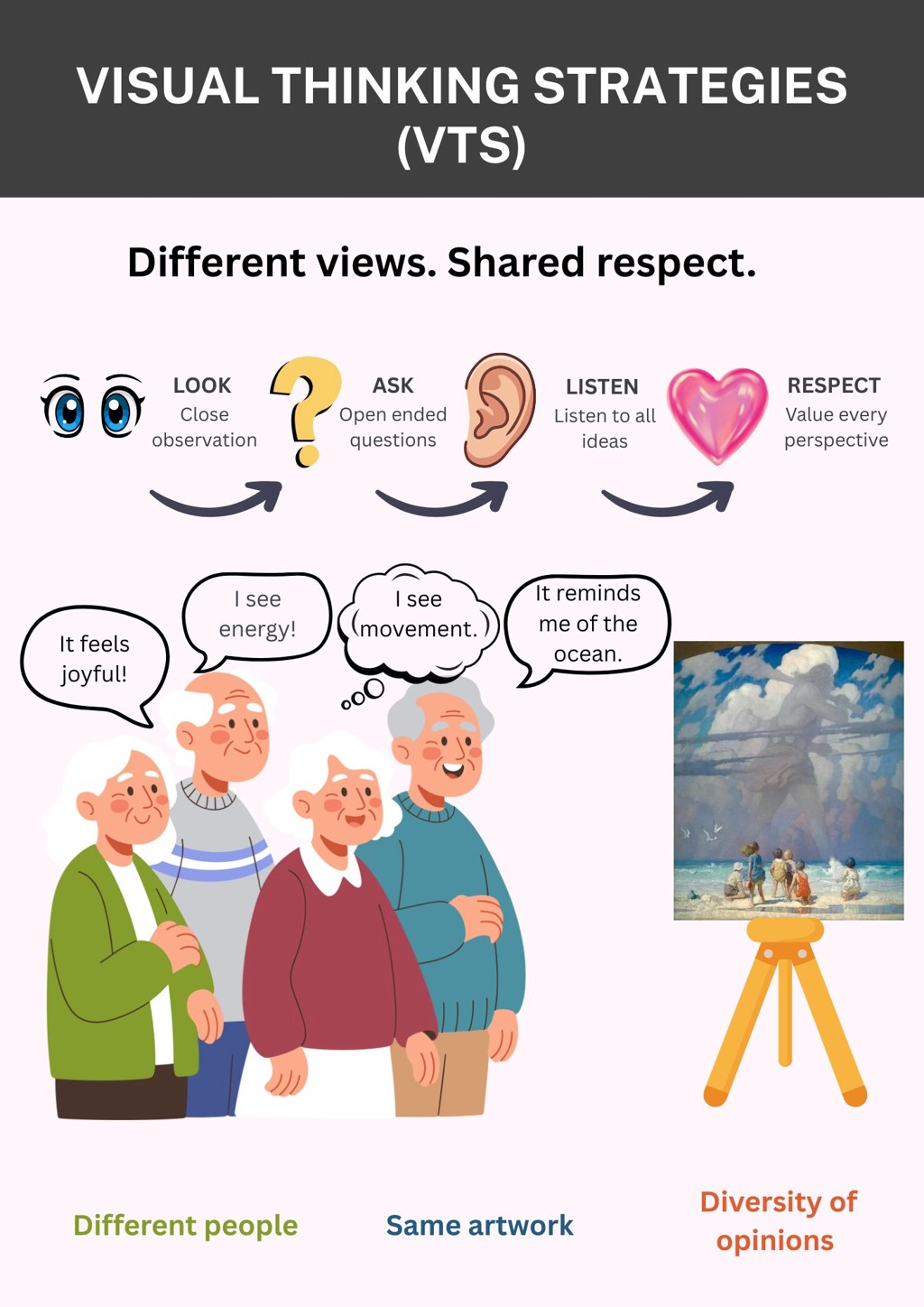
Which are the three VTS stages and the type of questions a facilitator can ask?
1. To open the discussion
| “What happens here?” |
2. To support reasoning and search for visual evidence
|
“What do you see that makes you say that?” |
3. To include different opinions and perspectives |
“What more can we discover?” |
A good approach for the facilitator is at the end of the discussion to summarise participants’ opinions by using phrases like: "We can see that the same artwork sparks entirely different insights and associations", so as to highlight diversity as a core value of the process.
This way, the group discussion transforms from a knowledge test into a process of collaborative exploration. The primary objective for the group of seniors is not to reach a single, consensus interpretation, but rather to learn to listen, to articulate different opinions, emotions and reasoning, and to accept alternative viewpoints.
For the Cultural Ambassador, this means cultivating a sense of curiosity where people learn from each other through the power of art.
Evaluative / Risky phrase (What to AVOID?) | Safe / Non-judgmental alternative (What to USE?) | Methodological objective |
“No, you are wrong! This is not a winter evening but an autumn sunset.” | “This is interesting. Which colours or details in the painting bring you into the atmosphere of a winter evening?” | Validating the feelings without imposing factual authority. |
“This is an excellent observation / the correct observation!!!” (Be careful with excessive phrases, as they can make others feel left behind). | “Thank you for sharing this. You notice (paraphrasing what was said) ... What do the others think about this?” | Maintaining equality and balance within the group. |
“Did you understand what the author wanted to say?” | “What do you think happens here?” | Shifting the focus from a “history test” to a “personal experience”. |
Small groups for cultural exploration create opportunities for a deeper connection between participants, but this requires time and careful facilitation. Adult learners and seniors often bring diverse experiences, levels of confidence, and expectations to cultural activities. Therefore, the facilitator should design a process where trust is built gradually through small steps, respect, and predictability.
Trust in a small learning group does not emerge automatically and cannot be achieved by demanding people to be open. It is built through consistent interactions in which participants gradually realize that their opinions and personal boundaries will be respected. This process is directly linked to the concept of psychological safety developed by Amy Edmondson (1999), according to which effective group participation and learning depend on the feeling that one can be active without fearing embarrassment, correction, or rejection.
PSYCHOLOGICAL SAFETY | |
Allows participants to: |
Without it:
|
✓ Participate actively in the session | o Resistance increases |
✓ Express their ideas and concerns freely | o Communication decreases |
✓ Provide feedback | o Learning is limited |
✓ Stay engaged with the topic |
|
In groups developed within the cultural sphere, psychological safety is critically important, as artworks, stories, and objects often trigger deep personal associations, memories, and emotions.
How to build trust in small groups? Some basic principles:
✓ Start with low-risk activities: The initial sharing moments should allow for participation without pressure.
✓ Set personal boundaries: Let participants themselves determine how personal they want their sharing to be.
✓ Provide consistency and structure: Clear rules create a sense of safety and security for participants.
✓ Encourage active listening: The facilitator should demonstrate through their entire behaviour that every perspective is valued.
✓ Ensure balance between individual perspectives and community sense: Personal experience is embraced as a valuable resource for the group.
To manage this delicate process with seniors, the facilitator and Cultural Ambassador should apply several fundamental principles of structuring effective group dynamics:
“From object to person” principle: Psychological safety requires starting with exploration of the cultural object before moving to the internal world of the adult person. Instead of direct questions like "Can you tell a personal story related to this object?", which can stress the group, the facilitator should first ask: "Look at this artwork. Is there any story or memory which it brings to you?" In this way, the adult participant is free to share their experience through a metaphor or a symbol, by maintaining control over how much to reveal.
Gradual approach through low-risk activities: At the beginning of the session, introduce tasks that do not require a high level of self-disclosure - for example, choosing a specific painting, making a simple association, or saying a single word. Only after predictability is established in the group, the facilitator can smoothly make the transition from individual observation to a shared experience or a personal storytelling.
Voluntary participation and control over one's own narrative: Sharing personal experience is most powerful and inspirational when it is completely voluntary. The facilitator should consciously avoid pressure and statements like "Everyone must say something." It is far more effective to offer choices: "Who would like to share?" or "If you prefer, you can just mention a word or an idea."
Encourage diverse forms of silent participation: For the facilitator, it is vital to remember that effective participation is not measured solely in quantitative terms. An elderly adult can experience a cultural object just as deeply through observation and internal reflection, as through speaking or listening. This way, silence is not a defect in the process but a legitimate form of participation. No one should be expected or demanded to share an equal amount of expressions, feelings or stories.
Ultimately, the primary task of the facilitator and Cultural Ambassador is to monitor not only the participants who dominate the conversation but also those who remain on the periphery, providing them with a quiet space to join without coercion. When trust is built through predictability, respect for personal boundaries, and mindful listening, the group naturally transforms from a gathering of strangers into a protected space for authentic cultural exchanges and deep human connection.
Evaluative / Risky phrase (What to AVOID?) | Safe / Non-judgmental alternative (What to USE?) | Methodological objective |
"Tell us something personal about yourself so we can get to know each other." | "If you wish, share something small that connects you to this image/object/story." | Reducing pressure and respecting personal boundaries of participants. |
"Let’s have everyone introduce themselves and tell their story." | "You can start with something that caught your attention or intrigued you." | A gradual transition from safe observation to personal participation. |
"Why don't you want to share?" | "Everyone chooses their own level of participation. You can simply keep what you have discovered for yourself." | Creating a sense of control and autonomy for the participant. |
"This is a very superficial answer." | "Thank you for sharing that. Would you like to add anything else?" | Encouraging deeper reflection without invalidating the initial contribution. |
"Everyone must participate actively." | "There are different ways to be part of the group through listening, observing, or sharing." | Recognizing different styles of participation and inclusion. |
"Don't worry, we are all friends here." | "Let's build a space where we can listen to each other with respect and curiosity." | Building trust realistically instead of assuming it already exists. |
Art and cultural experiences provide a space for expression that does not rely solely on knowledge or technical skills. Open facilitation enables elderly adults to use images, shapes, colours, stories, movements, and creativity as a language to share their personal experiences.
Contemporary approaches in cultural education view art not only as an object of academic study, but as a powerful tool for personal interpretation, identity formation, and building social dialogue. This transformation is directly linked to the development of the concept of participatory museum practice, popularized by Nina Simon in "The Participatory Museum". According to this model, visitors to cultural institutions cease to be passive consumers of ready-made artistic facts and become active participants who co-author the creation of meaning. In this shared environment, the role of the facilitator is radically reimagined from a traditional expert who unilaterally imposes the "correct" knowledge about the artwork, to a host and guardian of the process, by creating conditions in which every individual can engage according to their own capacity, interests, and individual mode of expression.
Which are the principles of inclusive facilitation in cultural environments?
Everybody’s contribution is valuable: There is no single correct way to interpret an artwork.
Encouragement over evaluation: The facilitator should support the process rather than evaluating results.
Accessibility: Activities should allow for participation regardless of prior experience.
A variety of means of expression: Drawing, sketching, storytelling, movements, crafting, conversation – all these encourage expression and are welcome.
Empathetic presence: The facilitator accepts diverse emotional reactions of participants.
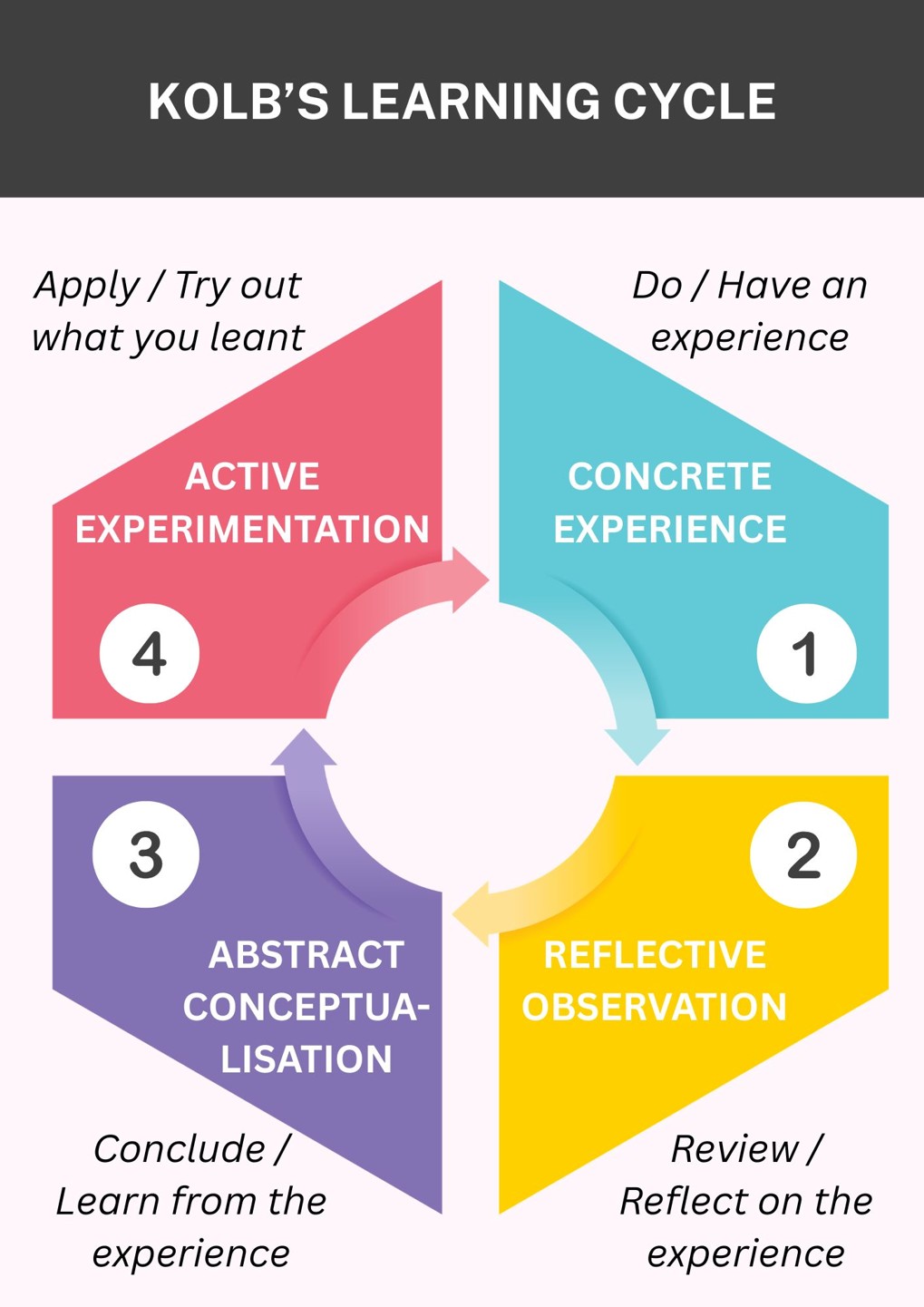
This inclusive approach brings even greater effect when working with adult and elderly adult (senior) learners, as they enter the cultural space with their own specific life stories and personal memories, as well as with accumulated cultural experiences, yet often with an initial lack of confidence when facing art. Here, David Kolb's theory of experiential learning ("Experiential Learning: Experience as the Source of Learning and Development") comes to place. According to it, adults construct new and sustainable knowledge most effectively when they have the opportunity to connect new information, insights and skills with their individual past experience and personal life story.
When putting this approach into practice, the facilitator and Cultural Ambassador should:
1) Consciously avoid questions that place participants in the position of being tested or require specific prior knowledge from them, such as the typical inquiry: "What did the author intend to say?". Instead, to stimulate group engagement, the facilitator should pose questions like: "What meaning does this image / artwork have specifically for you?" or "What in this painting makes you think of a certain memory or an idea?"
2) Design tasks so that they begin with the easiest possible level of participation and lead towards deeper reflection. At the very beginning, a good practice is to offer a task with no right or wrong answer, such as an individual choice of a specific image / artwork / artefact, word, or symbol at the gallery or museum. This allows the adult learner to first establish a quiet, personal connection with the artwork or a museum artefact before being faced with the challenge of speaking about it in front of others.
3) Involve moving to sharing in a safer environment in pairs or in small groups of three. This reduces tension and builds trust before transitioning to the final whole-group discussion.
4) Avoid evaluation of ideas, suggestions or comments by using categories like "right", "wrong", "I like it" or "I don't like it". When a participant shares a feeling, for example, "I see/feel... this or that in the painting", the facilitator should neither confirm nor reject the statement. Instead, they should ask questions about the process of perception itself, such as: "How did you choose this symbol?" or "Which element in the artwork makes you feel this way?". By applying the principle of multiple meanings, the facilitator encourages participants to accept that a single artwork can and should generate completely different, parallel co-existing interpretations among different individuals.
5) Accept varying levels and paces of participation in the group as a natural resource. The fact that some individuals are extroverts and speak extensively, while others prefer to remain quiet and to observe, should not be viewed as a problem, but rather as normal group dynamics. Therefore, the facilitator's task is to provide space for quieter adult participants as well, by offering them alternative channels of expression such as written notes, reflection time, or pair work, without pressuring them.
6) Paraphrases what participants have said without judgment and summarizes the discussion with phrases like "We can see how the very same artwork sparks entirely different associations in each of us". This way, the facilitator validates diversity as a value and avoids making the session a test of knowledge. Instead, they transform it into a process of collaborative exploration, shared participation, reflection and mutual understanding, and encourage the group to learn not only from the explored cultural objects but also from participants themselves.
Evaluative / Risky phrase (What to AVOID?) | Safe / Non-judgmental alternative (What to USE?) | Methodological objective |
"This doesn't look much like a symbol." | "It is interesting how you chose this image / symbol. What meaning does it have for you?" | Shifting the focus from external form to personal meaning. |
"What is the right way to understand this artwork?" | "What different messages can we find in this artwork?" | Supporting multiple interpretations and critical thinking. |
"You don't need to draw well and be a professional painter. Just try." | "There is no standard for artistic skills here. What matters is what you want to express." | Removing the fear of evaluation and encouraging artistic freedom. |
"This is very interesting but is not what the author intended to say." | "Your perspective shows how the artwork can be experienced in a different way." | Validating personal experiences without imposing an expert’s opinion. |
"Does anyone have a better idea?" | "What other ideas or feelings are emerging within the group?" | Avoiding competition and promoting a dialogue among participants. |
"Explain what you have done." | "If you wish, tell us what your artwork or the process means to you." | Supporting voluntary self-expression and personal choice. |
By its nature, art is very subjective and is perceived in different ways by different people, depending on their emotional status, personal memories, preferences, social and educational backgrounds, etc. Even age can bring specific meaning to the way how one connects with artworks and cultural heritage.
At the same time, art and culture are powerful tools that help people to externalise their internal feelings and thoughts, to build their emotional resilience and to connect with others.
Art history is a “historical study of the visual arts, being concerned with identifying, classifying, describing, evaluating, interpreting, and understanding the art products and historic development of the fields of painting, sculpture, architecture, the decorative arts, drawing, printmaking, photography, interior design, etc.” (Source: Art history | Painting, Sculpture & Architecture | Britannica)
Cultural history is defined as “an approach that examines history through the lens of culture, emphasizing the complexities and variations in social categories over time and place, while incorporating methodologies that critically analyze narrative truth claims and view culture as a symbolic or semiotic system.” (Source: Cultural History - an overview | ScienceDirect Topics)
So, generally we could say that….
Through art and cultural history, experts study the objects of art and culture considered within their time period. In doing so, they analyse various factors, such as cultural, political, religious, economic or artistic ones, which contribute to the visual appearance of an artwork or the cultural and historical implication of a museum object or artefact, so to better understand the world and the societies in which they were created.
Art appreciation is linked with the way how each person connects emotionally with arts. It focuses on emotional responses which an artwork or a cultural artefact provokes in the viewer. By its essence, art appreciation is a process of exploring, reflecting and analysing an artwork, so to connect with it, to externalise an individual’s internal feelings and thoughts, to refresh their memories and to help them better link with themselves and with the others.
Therefore, art appreciation could be a powerful trigger for encouraging communication and expression of emotions and feeling, irrespectively of a person’s age. As with art, there is no right and wrong answers, each artwork or cultural artefact touches different people is a different way, shakes their ultimate beliefs and perception of reality and evokes the full palette of emotions, starting from happiness and joy, through anger and sadness, to pain, dislike and even disgust and rejection. This way, art and culture can foster a variety of emotional responses and interpretations within the viewers. They stimulate their thoughts and conversations, which otherwise could be difficult to convey or describe, and help for their socialisation, which is particularly valuable for elderly people.
What to consider when facilitating group reflection on artworks through the Art Appreciation approach?
✓ Create a psychologically safe and supportive group environment, which allows open discussion and encourages interpretations of artworks and their elements. If someone sees something in the artwork which is not correct, do not interrupt them immediately. Allow that person to share their observations and to explain their ideas, emotions, feelings or memories.
✓ Allow seniors to freely express their feelings and emotions. If necessary, give them more time to find the right word and avoid judgement and criticism.
✓ Respect their boundaries, opinions and pace for diving deeper into their emotions and memories. Not everyone is ready to go out of their comfort zone easily and to share moments of their past. If necessary, provide emotional support.
✓ Keep in mind that for some people, Art Appreciation and reflection on artworks can be a cathartic experience, allowing them to release hidden emotions, process trauma or cope with difficult experiences from their past or present. In those cases, embrace empathy and understanding and encourage the elderly participant to take a break or to use other art means to tell their story or to express their emotions or life experiences.
✓ Ask simple, encouraging questions related to the observed artwork/s and its composition/s and elements. Adopt active listening to participants’ responses and insights and provide them with opportunities to share their observations and thoughts.
✓ Separate contemplation of artworks from their interpretation. Through focusing first on "What we see?" and then on "What does it mean for you?", the facilitator lowers the fear of making a mistake and allows participants with no prior knowledge of art to feel more secure to share their ideas and feelings.
✓ Try to ask open-ended questions, such as: "What do you notice / see in this painting?" or "What caught your attention?". This explores different opinions and encourages elderly participants to examine the artworks, to share their observations and to explore more ideas.
✓ Avoid starting with an explanation of the artwork, but with an invitation to participants first to share what they see in it and how they feel it, before telling them more about how art historians or cultural experts interpret it. This will encourage seniors to be explorers and to search for their own meaning. If necessary, remind them that art is very subjective and everybody could have their interpretation of one or another artwork.
With ageing people tend to reflect more often on their life stories and memories and to recollect one or another moment from their past with joy, pride or on the contrary – with sadness. This way, a painting, a sculpture, a photograph or a museum artefact can revive lots of memories, stories and emotions and bring them back to moments from their lives which they have forgotten for one or another reason.
Thus, reminiscence enhances the emotional well-being of seniors by helping them process their past experiences, boost their self-esteem, reduce the feeling of loneliness and isolation, and strengthen their social connections with both – their families and friends.
What is reminiscence? | It is a therapeutic approach which involves recalling past experiences and memories by using prompts like photographs, music, objects, etc. It is particularly suitable for elderly people and helps them to improve their well-being, to enhance their mood and self-esteem, to age actively and to foster social connections by recalling meaningful memories and past experiences. Reminiscence activities can be done individually, or in small or bigger groups. They focus on encouraging emotional connections and mental stimulation of seniors, rather than testing their memory accuracy. |
What is creative reminiscence? | It builds on reminiscence and enriches it with artistic means and approaches to facilitate recollection. In addition to verbal conversations, a wide range of creative stimuli is used to activate the recollection process and participants' senses, and to bring positive emotions. These could include involvement and combination of art and art appreciation, visits to museums, manual and craft activities, singing and listening to music, dances and other body movements, or various forms of theatrical improvisations. |
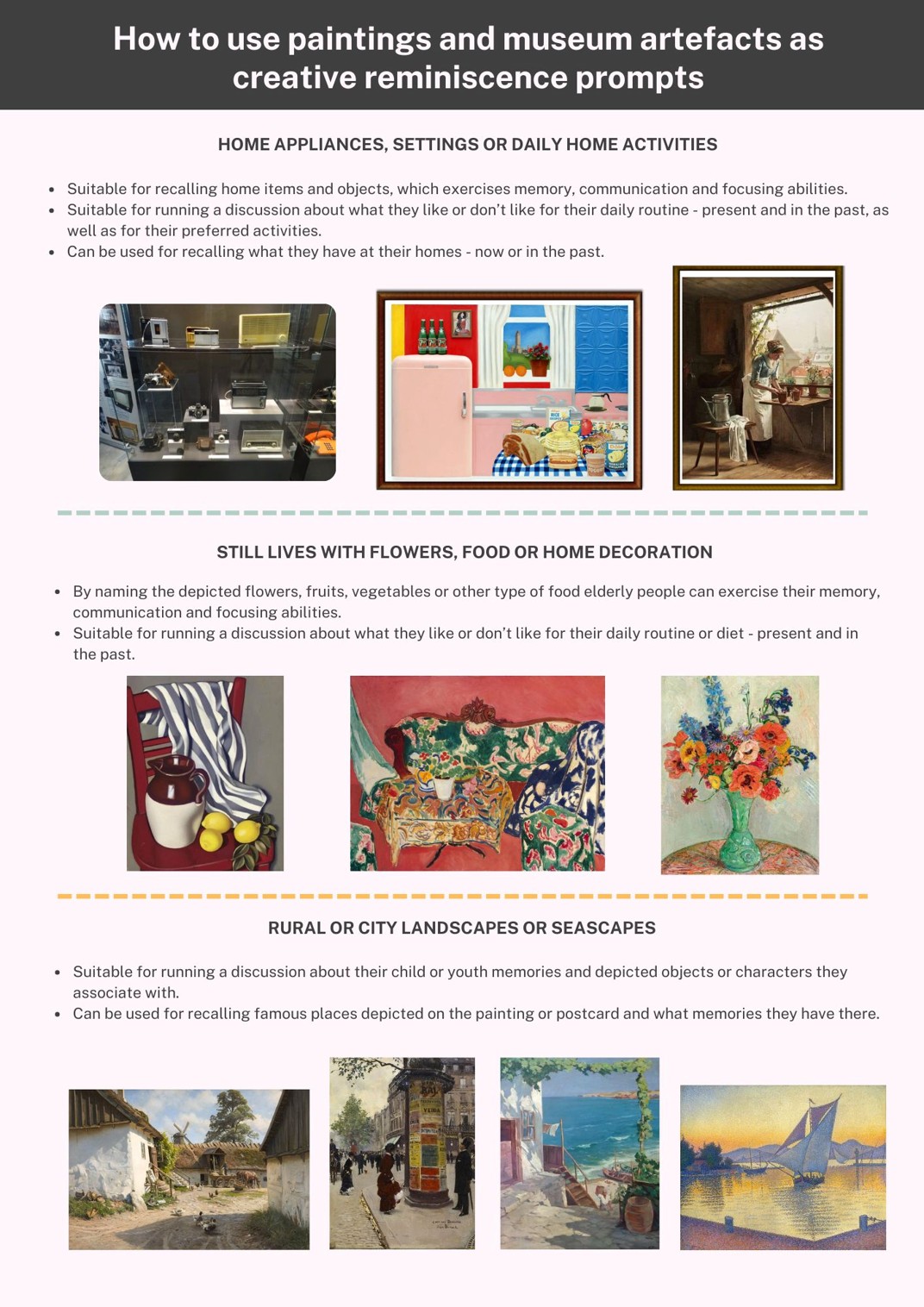
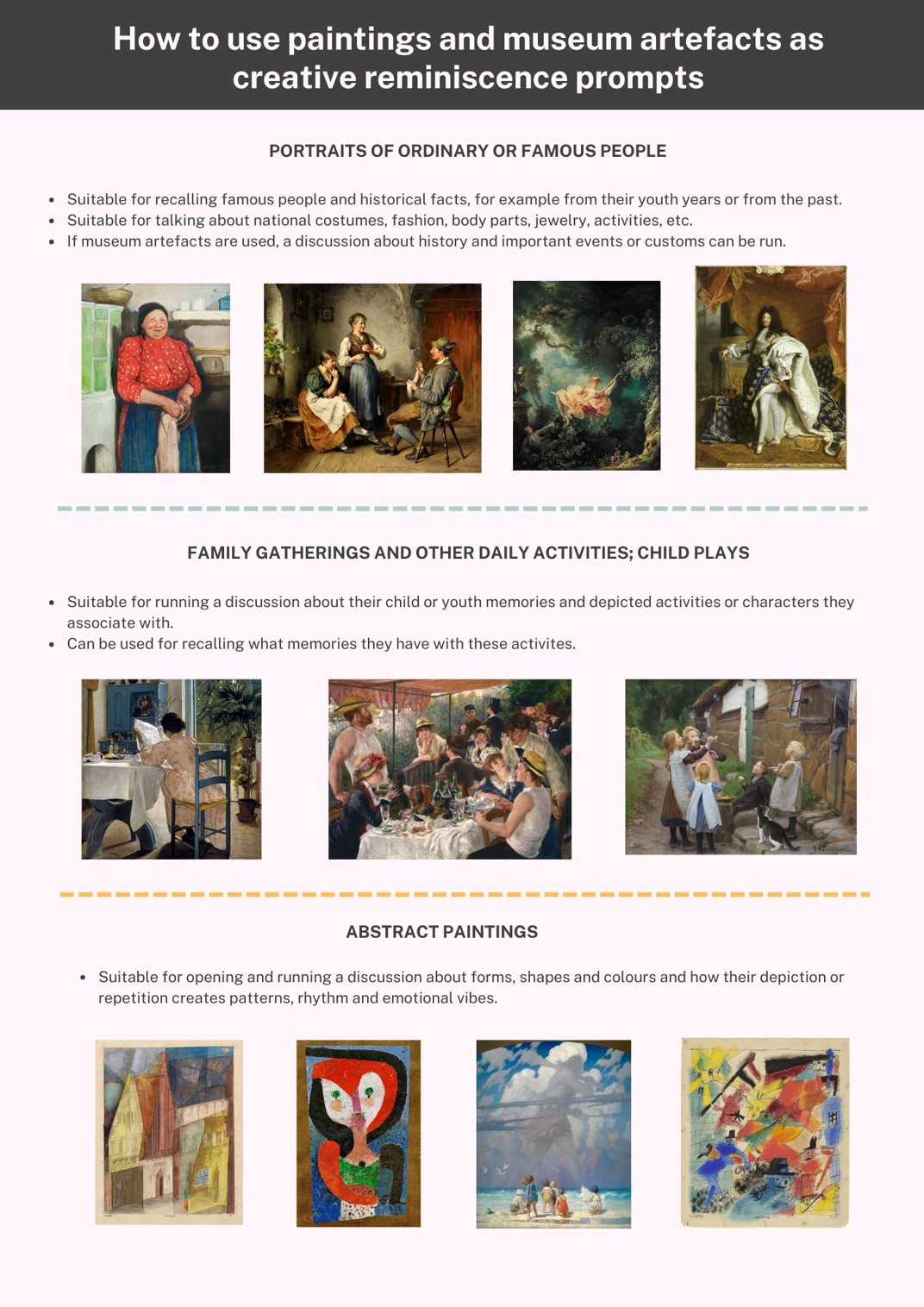
Art Appreciation and Creative Reminiscence bring different benefits to elderly people and their families. In addition, they can enrich activities which museums, art galleries and other cultural institutions organise for this group of visitors. Through them, seniors can be not passive viewers of paintings, sculptures or museum exhibits, but active participants who interact with them.
Some of emotional benefits from combining these two approaches include:
Enhancing seniors’ emotional well-being and reduces their isolation, sense of loneliness, or boredom from dull daily routines by evoking positive memories.
Increasing social interaction and people-to-people connection. The recollection and storytelling processes encourage socialization among seniors, which can improve their communication abilities, narrative skills and can create new bonds among them by discovering common interests or shared experiences.
Strengthening bonds with family members and other seniors through shared stories, emotions and explored artworks and artefacts. As reminiscence activities provide insights into the person’s life, they improve understanding of the involved people.
Encouraging imagination and providing cognitive stimulation by engaging creativity, memory and thought processes, which potentially slow with ageing.
Improving memoryand helping elderly individuals recall past events, which can enhance their cognitive function and memory retention, as well as boost their self-esteem and a sense of achievement by reflecting on positive life experiences.
Increasing seniors’ interest in art and culture, as well as in life-long learning, by encouraging them to learn and reflect on well-known or less-familiar paintings, sculptures or museum artefacts, thus boosting their curiosity and willingness to learn and reflect.
Case study 1: Yale University Art Gallery, Art and Language Through Yale Art Gallery Objects: Open Educational Resources |
Country, city: USA, City of New Haven |
Practice holder/s: Yale University, https://www.yale.edu/ |
Yale University has the oldest college art museum in North America. The Gallery houses nearly 300,000 objects from around the world, as well as the largest collection of British art outside the UK, and a collection of nearly 1,000 instruments which document the history of the world’s music traditions.
The Yale University Art Gallery has developed a series of open education resources which offer a variety of teaching tools, activity samples, and academic articles on how to enhance language and culture teaching by exploring objects from the vast Gallery’s collection. It also fosters collaboration among language educators, providing a platform to share ideas, activities and strategies for teaching through art.
The teaching methods are categorized into four groups that can be aligned with specific educational goals for all teaching levels. The resources were developed by educators and museums to foster learning through art.
The four categories are:
1. Deep Observation and Reflection, which encourages careful, prolonged observation and reflection on art pieces, fostering mindfulness and detailed articulation of insights.
2. Critical Thinking and Inquiry, which engages learners in questioning and analyzing artworks to develop critical thinking skills and to explore diverse perspectives.
3. Narrative and Contextual Understanding, which explores the stories and historical contexts behind artworks, enriching learners’ comprehension of cultural and historical themes.
4. Hands-On and Sensory Engagement, which involves direct interaction with art materials, enhancing learning through tactile and sensory experiences.
Sources: https://artlang.yale.edu/ & https://www.yale.edu/collections/museums-and-libraries
Case study 2: Understanding How Visual Thinking Strategies Works for Teachers |
Country, city: USA, Illinois, Springfield |
Practice holder/s: Illinois State Museum, https://www.illinoisstatemuseum.org/ / YouTube channel - https://www.youtube.com/@IllinoisStateMuseum |
The short educational video presents a practical example of putting Visual Thinking Strategies (VTS) method into practice with two artworks.
The video starts with a brief description of VTS method and how to apply it for looking deeper into artworks and how to use it with historical objects. The three important questions are presented: “What do you see here? / What do you notice here?”; “What makes you say that?”; “What more can we see?”.
The importance of pointing out at the artwork what learners share they see and paraphrasing their observations is highlighted, so to encourage them to go deeper and to continue adding their new insights or emotions.
Then, two practical examples with different paintings are demonstrated to illustrate the process.
Source: https://www.youtube.com/watch?v=H-1vm8-3LEI
Case study 3: “Forget-me-not: Creative Reminiscence” Erasmus+ Project |
Country, city: Czech Republic, Bulgaria, France and Spain |
Practice holder/s: Reminiscencni centrum, z. s. (CZ), Creativity and Educational Studio “ARTIED” (BG), edEUcation SAS (FR) and VINCORE SCCL (ES) - https://www.forgetmenotdigital.com/en-gb/ |
“Forget-me-not: Creative Reminiscence” was an 18-month Erasmus+ Project (2024-1-CZ01-KA220-VET-000244635), which was implemented between September 2024 and February 2026. Its overall objective was to improve inclusion and quality of life of people living with dementia by equipping VET providers, health and social care professionals and informal family carers with new competences and tools to enrich reminiscence therapy approach with art appreciation, craft, music and theatrical activities.
Key project training materials and outputs:
· An Educator’s Manual and a Training Programme with practical tools and activities for creative reminiscence sessions for engaging people living with dementia. The learning materials build on the reminiscence approach and enrich it with practical guidance on how to combine it with theatrical activities, art appreciation and music, craft activities and reminiscence life storytelling, and digital memory boxes.
· Library of 8 practical video resources on FMN:CR Approach, which reflect different combinations of reminiscence and at least 2 art activities: crafts, theatre, music and art appreciation. The videos were recorded during creative reminiscence sessions organized in each partner country, with direct involvement of people living with dementia and their carers. Each video shows a step-by-step explanation of how to prepare and organize a creative reminiscence session and is accompanied by a downloadable, short description of different stages.
· Recommendations on how to be dementia inclusive and how to organise dementia-friendly Creative Reminiscence activities and dedicated spaces.
Note: Although the project was focused on older people living with dementia, the proposed teaching and learning materials and approaches are suitable for elderly people in general and can be easily used at any cultural space which likes to start creative reminiscence activities based on art appreciation, craft activities and manual life storytelling, etc.
Activity 1: Personal Resonance and Emotional Bridge |
Learning Objectives: · To break the ice among elderly participants and to encourage them to exchange ideas, insights and thoughts without the risk of critical evaluation. · To encourage sharing of personal memories, emotions, and experiences through visual stimuli. |
Learning Outcomes: Participants have a sense of connection with one another and understand that art speaks in a different way and is linked with their life stories. |
Duration: Between 45 and 60 minutes, depending on the level of interaction |
Type (individual or group): Group of up to 10 people; All participants sit or stand in a circle. |
Needed equipment and materials: · One impactful painting, reproduction or a colourful print of the painting in A3 format (to be contemplated by all participants). If necessary, A4 colourful prints could be given to each participant for easy observation. 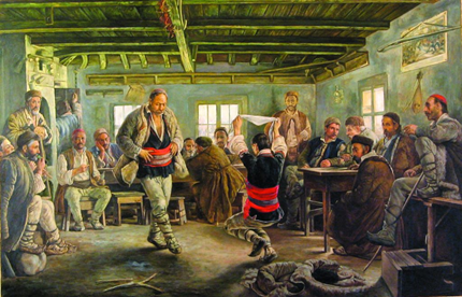 A suitable painting can be for example, a family or everyday-life scene such as “Rachenitsa Dance” by Jan Murkvichka / Ivan Mrkvička, 1894, available at the Bulgarian National Art Gallery, https://nationalgallery.bg/bg/, and in its public digital collection on https://nationalgallery.bg/wp-content/uploads/2017/10/8-5.jpg) or another painting chosen by the facilitator. |
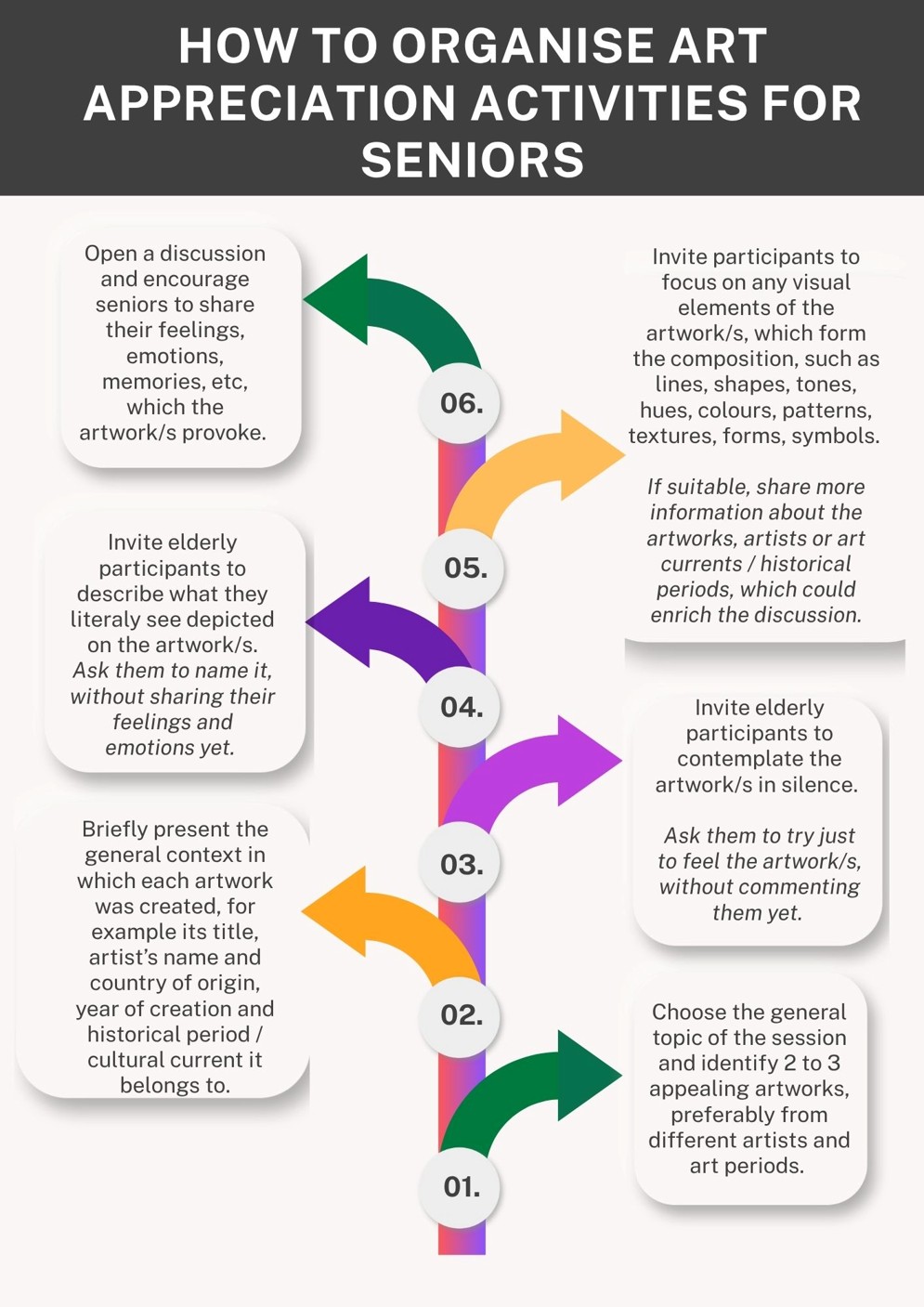
Step-by-step description: Stage 1: Preparation Facilitator should familiarise with: · The concept of Visual Thinking Strategies (VTS) and Infographic 1. · The process of organisation of an Art Appreciation session and Infographic 3. · How to use paintings and museum artefact as creative reminiscence prompts and Infographic 4. Select the painting which will be discussed. Some ideas for suitable types of paintings are provided in Infographic 4. Links to digital collections of museums and art galleries are available in Tips for further reading (bibliography and additional resources) Section.
Stage 2: Implementation (between 30 and 45 minutes) · Step 1: Following the process in Infographic 3, Steps 2 & 3 briefly present the general context in which the painting was created – only its title, artist, year of creation and the general art current it belongs to (in case of the example painting, this will be: title: ”The Rachenitsa Dance”; Autor: Jan Murkvichka / Ivan Mrkvička; Year of creation: 1894, Art current: Realism). Then, ask the group to observe the artwork in complete silence for about 2-3 minutes. · Step 2: Following the process in Infographic 3, Step 4, ask elderly participants to describe what they see depicted on the painting. IMPORTANT NOTE: At this stage, clarify that they should focus only on what they literally see in the painting, without sharing their emotions or associations. · Step 3: Following the process in Infographic 3, Step 5, ask seniors to focus on visual elements of the painting. If necessary, provide more information about the artwork, painter, historical period or art current during which it was created. Focus on main facts or provide some interesting information, which could enrich the discussion later on. · Step 4: Following the process in Infographic 3, Step 6, each participant is invited to complete the sentence: “This painting brings me back to the memory of...” or “This painting reminds me of a moment in my life when I felt...”. IMPORTANT NOTE: The facilitator ensures that no one comments on or artistically analyses another person’s memory. Stage 3: Feedback collection (around 15 minutes) The group shares how they felt while listening to the stories of others. If someone likes, they could elaborate on their story or find a connection with someone else’s story. |
Tips and adaptations: · It is important for the facilitator to encourage active listening among participants and to ask them not to interrupt one another when sharing their suggestions, observations and insights over the painting. · It is important for the facilitator and participants to maintain an open, friendly and non-judgemental atmosphere during sharing of personal stories and to respect the shared emotions, feelings and life experiences. · The facilitator should observe personal boundaries of participants and if someone would prefer not to share a story, they should not force them. Once the elderly person is ready, they could do it themselves. · The facilitator is free to select other types of paintings, sculptures or museum artefacts, which will suit the group and to adapt the process accordingly. |
Activity 2: The World Through Your Eyes |
Learning Objectives: · To break the ice among elderly participants and to encourage personal sharing, without the risk of critical evaluation. · To build empathy and to encourage acceptance of different or opposing feelings about the same artwork.
|
Learning Outcomes: Participants recognise that completely different opinions can exist simultaneously without conflict. |
Duration: 30 minutes |
Type (individual or group): Group of up to 10 people; participants first work in pairs, then run a group discussion. |
Needed equipment and materials: · Abstract or more expressive painting – an original, reproduction or a colourful print of the painting in A3 format. If necessary, A4 colourful prints could be given to each pair for easy observation. · Post-it notes. |
Step-by-step description: Stage 1: Preparation Facilitator should familiarise with: · The concept of Visual Thinking Strategies (VTS) and Infographic 1. · The process of organisation of an Art Appreciation session and Infographic 3. · How to use paintings and museum artefact as creative reminiscence prompts and Infographic 4. Select the painting which will be discussed. Some ideas for suitable types of paintings are provided in Infographic 4. Links to digital collections of museums and art galleries are available in Tips for further reading (bibliography and additional resources) Section.
Stage 2: Implementation (around 20 minutes) · Step 1: Divide elderly participants into pairs. Give each pair three Post-it notes. · Step 2: Ask each person to look at the painting on their own and to write down three emotional words that the painting evokes in them. · Step 3: Ask the partners in each pair to share their words. They are often different (e.g., one person feels “anxiety”, while the other feels “calmness”). Their task is to explain to each other what in the painting creates these feelings, while the other person only listens with understanding, without commenting. · Step 4: (optional) If suitable, encourage participants in pairs to discuss the difference of opinions, so as to better understand each other’s point of view.
Stage 3: Feedback collection (around 10 minutes) Ask each participant to share with the whole group: “What did I learn about my partner through their way of seeing the artwork?”. |
Tips and adaptations: · It is important for the facilitator to encourage active listening among participants and to ask them not to interrupt one another when sharing their words, observations and feelings. · It is important for the facilitator and participants to maintain an open, friendly and non-judgemental atmosphere during sharing of the three words and to respect the named emotions and feelings. · The facilitator should observe personal boundaries of participants and if someone would prefer not to go deeper into their emotions, they should not force them. Once the elderly person is ready, they could do it themselves. · The facilitator could select more than one painting for the activity and propose each pair to discuss a different painting. · Instead of paintings, the facilitator is free to select one or more sculptures or museum artefacts and use them for the activity. |
Activity 3: „Cultural Suitcase – What Shall I Carry With Me?“ |
Learning Objectives: · To encourage empathy and mutual understanding among seniors. · To foster gradual sharing and building trust through symbols, personal associations and experiences of culture. |
Learning Outcomes: Participants realize that everyone enters the group with their own "cultural baggage"—memories, places, stories and values. They practice sharing in a safe way, without the need to disclose personal information if they do not wish to. |
Duration: 45 minutes |
Type (individual or group): Group of up to 10 people; Individual work, followed by small group work, then by Whole-group sharing.
|
Needed equipment and materials: · Collection of diverse culture related images / postcards / objects, such as reproductions or prints of paintings, vintage photographs, fragments of artworks, images of museum artefacts, architectural details or models (for examples of touristic souvenirs from famous places), or similar · Sheets of paper · Pens or pencils |
Step-by-step description: Stage 1: Preparation Facilitator should familiarise with: · The concept of Visual Thinking Strategies (VTS) and Infographic 1. · The concept of Kolb’s Learning Cycle and Infographic 2. · How to use paintings and museum artefact as creative reminiscence prompts and Infographic 4. Arrange the images and objects in the centre of the group.
Stage 2: Implementation (between 30 and 35 minutes) · Step 1: Invite participants to choose one object or image that "draws them in“ some way. No explanation is required at this stage. · Step 2: First Level of Sharing – Safe Distance: Ask each participant to complete one of the sentences: "I chose this image because it reminds me of..." or "This gives me a sense of...". The focus is on the feeling / impression rather than the personal story. · Step 3: Second Level of Sharing – Optional Disclosure: In small groups, participants can expand on their sharing: "If this object could tell something about me, it would say...". Everyone has the right to remain purely at a symbolic level. Stage 3: Feedback collection (around 10 to 15 minutes) In the whole group, participants discuss the following questions: “What helped you feel comfortable?” and “What did you learn about the others without asking direct and personal questions?” |
Tips and adaptations: · It is important for the facilitator to encourage active listening among participants and to ask them not to interrupt one another when sharing their feelings and impressions. · It is important for the facilitator and participants to maintain an open, friendly and non-judgemental atmosphere during the activity and to respect the shared emotions and feelings. · The facilitator should refrain from pushing for personal narratives. If someone would prefer not to go deeper into their emotions, s/he should not force them. If necessary, the facilitator could set a model by briefly sharing something of their own to prompt the process. · The facilitator should observe personal boundaries of participants and should emphasize that trust is built through small steps. |
Activity 4: „Stories that Meet – Bridges Between Experiences“ |
Learning Objectives: · To build a deeper connection between participants through exchange of personal associations and experiences. · To develop skills for listening with understanding and accepting different perspectives. · To foster a sense of belonging to a small group by discovering common human themes. |
Learning Outcomes: · Participants are able to share personal meanings related to cultural objects without feeling pressured to disclose overly private information. · They realize that different people can discover completely different stories behind the same cultural image. · They develop the ability to listen to others in order not to respond, but to understand them. |
Duration: 40 to 60 minutes, depending on the level of group interaction |
Type (individual or group): Group of up to 10 people; Individual work → Pairs → Small groups → Whole-group reflection |
Needed equipment and materials: · Images of cultural objects, such as reproductions or prints of paintings, photographs, images of museum artefacts, architectural details or models (for examples of touristic souvenirs from famous places), items from various cultures, etc. · Word / concept cards (e.g., home, change, journey, memory, belonging, freedom, encounter, tradition) · Sheets of paper · Pens or pencils
|
Step-by-step description: Stage 1: Preparation Facilitator should familiarise with: · The concept of Visual Thinking Strategies (VTS) and Infographic 1. · The concept of Kolb’s Learning Cycle and Infographic 2. · The process of organisation of an Art Appreciation session and Infographic 3. Place the images and objects in the centre of the group.
Stage 2: Implementation (between 35 and 40 minutes) · Step 1: "Silent Discovery": Ask each participant to choose one image or object that they feel carries a story. No explanation is required at this stage. The goal is to first establish a personal connection with the chosen image or object. The facilitator may say: "We are not looking for the most beautiful or correct picture or artefact. Choose the one that makes you think about something." · Step 2: "The Story Behind the Image": Ask each participant to write down a short sentence, using one of the following opening phrases: "I imagine this image / object holds a story about..."; "If this object were a memory, it would be..."; "This image makes me think of...". IMPORTANT NOTE: Participants can either talk about themselves or create a fictional story. This can allow them to maintain a safe distance, if someone does not want to share at this stage. · Step 3: “Encounter of Two Stories” (work in pairs): Each person shares their story by responding to the following questions: "What seems most important to you in this story?" and "What kind of feeling does this image bring up for you?". IMPORTANT NOTE: Partners are not allowed to analyze or to give opinions about what has been said. Afterward, the partners look for a single common word that connects both stories by answering the question "What do you find in common between your story and mine?". Example: "My picture reminds me of an old home, and yours of a journey. The common word is belonging". · Step 4: "Map of Common Themes" (work in small groups): The pairs gather into small groups and share only the common word they discovered. The group creates a shared "map" of the themes that emerge: memories; family; change; hope; identity; connection to a place, etc. The focus is on what unites elderly people, rather than on differences between them. Stage 3: Feedback collection (around 10 to 15 minutes) In the whole group, participants reflect on the following questions: "How did the way you look at someone else's story change?"; "Were you curious?"; "What builds trust in a small group?"
|
Tips and adaptations: · The facilitator should ensure that the conversation does not turn into evaluation or comparison of personal stories. It is important to direct attention to the process of connecting people by prompts like: "We don't need to have identical stories to find a common human theme." · It is important for the facilitator to maintain an open, friendly, respectful and non-judgemental atmosphere and to encourage active listening among participants. · The facilitator should observe personal boundaries of participants and if someone would prefer not to share a story, they should not force them. Once the elderly person is ready, they could do it themselves. In the meantime, they could put their imagination and share a fanciful story. · The facilitator should observe personal boundaries of participants. If an elderly participant becomes too emotional, he or she might be offered psychological support. |
Activity 5: „My Cultural Message – The Language of the Invisible“ |
Learning Objectives: · To encourage personal expression through visual symbols, colours, and shapes. · To support participants in discovering connections between cultural images and personal experiences. · To develop confidence that every individual has the right to their own way of creative expression and interpretation. |
Learning Outcomes: · Participants are able to use art appreciation as a means of expressing ideas, feelings, memories and values. · They understand that the artistic process is not evaluated in terms of "right & wrong" but through personal meaning and experience. · They develop respect for the diverse ways in which people represent themselves. |
Duration: 45 to 60 minutes, depending on the group interaction |
Type (individual or group): Group of up to 10 people; Individual creative work → Whole-group reflection
|
Needed equipment and materials: · Originals, reproductions or A3 format prints of paintings. Note: It is recommended to select several artworks from different categories listed in Infographic 4, so participants have the choice to select the one which resonates with them the most. · Colourful A4 prints of the paintings (one for each participant) · Paper, art supplies, old magazines, brochures, newsletters, etc. for cutting, scissors, glue, colourful pencils or markers · Post-it notes (for Step 4) |
Step-by-step description: Stage 1: Preparation Facilitator should familiarise with: · The concept of Visual Thinking Strategies (VTS) and Infographic 1. · The concept of Kolb’s Learning Cycle and Infographic 2. · The process of organisation of an Art Appreciation session and Infographic 3. · How to use paintings and museum artefact as creative reminiscence prompts and Infographic 4. Select the paintings which will be used. Some ideas for suitable types of paintings are provided in Infographic 4. Links to digital collections of museums and art galleries are available in Tips for further reading (bibliography and additional resources) Section. Place various images, prints and materials in the centre of the group. Stage 2: Implementation (between 35 and 40 minutes) · Step 1: "Choosing an Inner Image": Ask participants to choose a painting from the proposed ones, which resonates with them the most. IMPORTANT NOTE: Highlight that the participants should not think about which artwork / image looks more beautiful, but which makes them pause and reflect on it. · Step 2: “Reflection and personalisation of the image”: Following the Art Appreciation steps, ask participants to look at the painting they selected, to contemplate in silence and to try to connect with it as memories, emotions or insights. IMPORTANT NOTE: Ask them not to share their observations, feelings or associations yet. · Step 3: “Creating a Symbol / a Collage”: Invite participants to create a small collage or a personal symbol of emotions, recollections or insights which emerged as a result of reflecting on the painting. Ask them to try to answer the following guiding question: "What am I representing from my inner and cultural world?". Encourage them to use various colours, shapes, images, cutouts, etc. when creating their symbol or collage. If participants want, they can also include parts of the appreciated painting into their artwork (for this they could use the colourful A4 prints). IMPORTANT NOTE: The facilitator should remind everyone that the symbol / collage does not need to be "beautiful" or "professional“, but should present their ideas and should communicate the message they like to convey. For example, by highlighting: "The artwork does not show just skills. The most important is the message it conveys to viewers." · Step 4: "Silent Gallery": Once participants are ready with their collages / symbols, ask them to place their artworks around the space. Invite participants to go around the improvised exhibition and to look at all collages and symbols in silence. Then, invite everybody to choose a collage / symbol, created by another person and to write down on the back side of the Post-it note: "What I feel from this collage / symbol is...". Ask seniors to stick the note next to the artwork, in a way not to be seen / written by others at this stage. IMPORTANT NOTES: Highlight to participants that guessing "what the author intended to say" is not allowed and that no one should evaluate the professional and artistic skills of the author. Stress out that each work can have different meaning to viewers, can provoke a variety of associations, emotions and memories and that there are right and wrong answers. Clarify that it is not obligatory to share thoughts for all peers’ works, however it is highly recommended to try to say some insights for most of them. Stage 3: Feedback collection (around 10 to 15 minutes) Ask participants to have a look at others’ insights and sharings on the Post-it notes. Invite them to briefly say if they found some association, emotion or sharing which surprised them or was an unexpected way of connecting with their collage or symbol. IMPORTANT NOTE: Highlight again that art is very subjective and that there is not a right and wrong way of connecting with it. Stress out again that each work can have different meanings to different viewers and can provoke a variety of associations, emotions and memories which can be completely different from that of the author and that this has happen to many world-famous painters and artists. If suitable, invite participants to voluntarily share what their collages or symbols represented or what was the most important message they wanted to convey. |
Tips and adaptations: · The facilitator should ensure that the conversation does not turn into evaluation or comparison between personal collages or symbols, neither into blaming or justifying what one or another participant wanted to say and how it was understood. To support diverse forms of expression and to prevent comparison or frustration, the facilitator can use phases like: "It is interesting how the same artwork could have different meaning for different people" or "Let's not look for what the paining, collages or symbol mean in general, but what it means to the person who created it, and to the person who looks at it. It is normal for those two to differ and this happens with many famous paintings and painters." · It is important for the facilitator to maintain an open, friendly and non-judgemental atmosphere and to encourage active listening, tolerance and respectful communication among participants. · The facilitator should observe personal boundaries of participants and if someone becomes irritated or shows signs of being offended or misunderstood, he or she might be offered encouragement or positive support. · In addition to paper, other types of texture, such as fabric, natural materials, etc, can also be used for creation of collages or symbols. |
Activity 6: „Voices in Art – One Artwork, Many Worlds“ |
Learning Objectives: · To develop abilities to accept different perspectives and cultural interpretations. · To encourage dialogue where differences are viewed as a resource. · To improve the ability to listen and to cultivate curiosity towards the experiences of others. |
Learning Outcomes: · Participants understand that a single artwork can have multiple meanings. · They can practice skills for expressing an opinion without imposing it. · They develop cultural sensitivity and empathy. |
Duration: 40 to 60 minutes, depending on the intensity of interaction |
Type (individual or group): Group of up to 10 people; Individual reflection, followed by a group work |
Needed equipment and materials: · One artwork (a painting, photograph, sculpture, or cultural fragment). In case of a painting an original, reproduction or a colourful print of the painting in A3 format are suitable. If necessary, A4 colourful prints could be given to each participant for closer observation. · Worksheets with roles / perspectives. Examples of perspectives: A person who sees beauty; A person who sees loss; A person who sees change; A person who sees hope; * A person from another culture/ historical period.
|
Step-by-step description: Stage 1: Preparation Facilitator should familiarise with: · The concept of Visual Thinking Strategies (VTS) and Infographic 1. · The concept of Kolb’s Learning Cycle and Infographic 2. · The process of organisation of an Art Appreciation session and Infographic 3. · How to use paintings and museum artefact as creative reminiscence prompts and Infographic 4. Select the artwork which will be used. Some ideas for suitable types of paintings are provided in Infographic 4. Links to digital collections of museums and art galleries are available in Tips for further reading (bibliography and additional resources) Section.
Stage 2: Implementation (between 30 and 40 minutes) · Step 1: "First Impression": The group observes the artwork in silence. Everyone writes down the first word or feeling that comes to their mind. · Step 2: "Shift in Perspective": Each participant receives a different perspective (role) and answers to the question: "If I look at this artwork through this point of view, I’d notice..." For example: "As a person looking for change, I’d see movement and transition." · Step 3: “Meeting of Interpretations”: Everyone shares their perspective. IMPORTANT NOTE: The others are not allowed to say, "That's not true." Instead, they should use: "That's interesting because..." or "I see something else because...”. Stage 3: Feedback collection (around 10 to 15 minutes) In the whole group, participants reflect on the following questions: "What changed when you looked at the artwork through another perspective?"; "How different opinions enrich the experience?"; "What does it mean to have room for everyone's opinions?", etc. |
Tips and adaptations: · The facilitator should not explain the "true meaning" of the artwork but support the dialogue and exchange of opinions. It is important to highlight to participants that "The goal is not to find a single truth about the piece, but to see how many different human experiences it can bring". · It is important for the facilitator to maintain an open, friendly and non-judgemental atmosphere and to encourage active listening, tolerance and respectful communication among participants. To support diverse forms of expression and to prevent frustration, the facilitator can use phrases like: "It is interesting how the same painting could have different meaning for different people". · The facilitator should observe personal boundaries of participants and if someone becomes irritated or shows signs of being offended or misunderstood, he or she might be offered encouragement or positive support. |
The module focuses on how to build and run open, non-judgemental and psychologically safe learning and cultural environments, which encourage discussion and personal sharing among seniors. Through active engagement with artworks, museum artefacts and other creative prompts, they could recall memories, tell stories, connect with others, socialise and age actively.
The combination of useful tips, inspirational infographics, case studies and practical activities allow active seniors who want to become Cultural Ambassadors, as well as museum and gallery workers and educators, cultural workers, adult educators, etc. to improve their knowledge and skills on how to actively engage elderly visitors so as not to be passive viewers of their exhibitions, but active contributors to cultural life.
Throughout the module, seniors and cultural educators and facilitators:
● Learned about Visual Thinking Strategies (VTS) and how to create a safe and non-judgmental group environment when discussing artworks.
● Become familiar with the concept of psychological safety and how to build trust in small groups of elderly cultural visitors, so as to encourage sharing and exploration of artworks and artefacts among them.
● Learned about David Kolb's theory of experiential learning and how to encourage personal expressions through open and inclusive facilitation of art and cultural learning experiences.
● Explored the difference between Art and Cultural history and Art Appreciation and improved their knowledge about how to organise Art Appreciation activities for seniors.
● Become familiar with creative reminiscence and how to use it for better connection with senior’s own memories and experiences, as well as with others.
● Explored the emotional benefits of combining Art Appreciation and Creative Reminiscence.
Were presented 3 case studies / practical examples and 6 practical activities on how to facilitate small group discussions for better understanding art and culture through connecting with artworks (following the art appreciation and creative reminiscence approaches).
· Visual Thinking Strategies (VTS) is a research‑based teaching method that uses facilitated discussions about art. Guided by three core questions (“What’s going on here?”; “What do you see that makes you say that?”; “What more can we find?”) learners build observation, critical thinking, communication, and collaboration skills.
· Psychological safety (in small group facilitation) is the process of creating and maintaining an open and supportive learning environment, in which participants feel comfortable to express ideas, to ask questions, to admit mistakes, and to challenge the others and the status quo without fear of embarrassment, correction, or rejection.
· David Kolb's theory of experiential learning (Kolb’s Learning Cycle) is an experience-based learning theory, which steps on the understanding of the learning process as a continuous cycle of experience, reflection, conceptualization, and experimentation, rather than a linear progression.
· Art appreciation is the understanding, analysis, interpretation and enjoyment of fine art, by creating meaning and emotionally connecting viewers with artworks’ artistic, aesthetic, historical and cultural significance.
· Reminiscence is a therapeutic approach which involves recalling past experiences and memories by using prompts like photographs, music, objects, etc.
· Creative Reminiscence builds on reminiscence therapy and enriches it with artistic means and creative stimuli to facilitate the process of recollection.
· Visual Thinking Strategies - https://vtshome.org/ (in English)
· Visual Thinking Strategies (VTS) - https://artlang.yale.edu/visual-thinking-strategies-vts (in English)
· Kolb’s Learning Cycle - https://www.simplypsychology.org/learning-kolb.html (in English)
· Kolb's Experiential Learning Model - https://www.ebsco.com/research-starters/education/kolbs-experiential-learning-model (in English)
· What is Active Ageing and how can Museums help? - https://www.museumnext.com/article/what-is-active-ageing-and-how-can-museums-help/ (in English)
· Psychological Safety and Learning Behavior in Work Teams by Amy Edmondson - https://www.researchgate.net/publication/243774322_Psychological_Safety_and_Learning_Behavior_in_Work_Teams (in English)
· The Participatory Museum (a practical guide to working with community members and visitors to make cultural institutions more dynamic, relevant, essential places) / Opening up the Museum (a TEDx video) by Nina Simon - https://www.participatorymuseum.org/ & https://www.youtube.com/watch?v=aIcwIH1vZ9w (in English)
· Tate Museum's online art terms glossary - https://www.tate.org.uk/art/art-terms (in English)
· MoMA’s online art terms glossary - https://www.moma.org/collection/terms/ (in English)
· Forget-me-not Platform - https://www.forgetmenotdigital.com/en-gb/E-Learning (in English, French, Spanish, Bulgarian and Czech; on the platform, there are learning materials in other languages as well)
· What Is Reminiscence Therapy? - https://www.verywellmind.com/how-reminiscence-therapy-works-5214451 (in English)
· Reminiscence and Reminiscence Therapy - https://www.alz.org/help-support/caregiving/daily-care/reminiscence-and-reminiscence-therapy (in English)
Links to the most famous art galleries with easily accessible online collections, which can be used for art appreciation & creative reminiscence sessions (the list is non-exhaustive):
· National Gallery, London, UK - https://www.nationalgallery.org.uk/
· Tate Modern Museum, UK - https://www.tate.org.uk/
· Le Louvre, Paris, France - https://www.louvre.fr/en/
· Rijksmuseum, the Netherlands - https://www.rijksmuseum.nl/en
· Museo Nacional del Prado, Madrid, Spain - https://www.museodelprado.es/en
· Uffizi Gallery, Florence, Italy - https://www.uffizi.it/en
· Vatican Museums, Vatican City, Italy - https://www.museivaticani.va/content/museivaticani/en.html
· Museum of Modern Art (MoMA), USA - https://www.moma.org/
· Alte Pinakothek, Munich, Germany - https://www.pinakothek.de/de/alte-pinakothek
Links to national museums and art galleries in the partner countries (the list is non-exhaustive):
Lithuania:
o National Art Gallery, Vilnius - https://www.lndm.lt/en/ndg/
o National Museum of Lithuania, Vilnius - https://lnm.lt/en/
Bulgaria:
o National Art Gallery, Sofia - https://nationalgallery.bg/
o National Museum of History, Sofia - https://historymuseum.org/
o National Polytechnical Museum, Sofia - https://polytechnic-museum.com/
Greece:
o National Gallery - Alexandros Soutsos Museum, Athens - https://www.nationalgallery.gr/en/
o Acropolis Museum, Athens - https://www.theacropolismuseum.gr/en
Romania:
o National Museum of Romanian History, Bucharest - https://www.mnir.ro/welcome-to-nhmr/
o The National Museum of Art of Romania, Bucharest - https://mnar.ro/en/